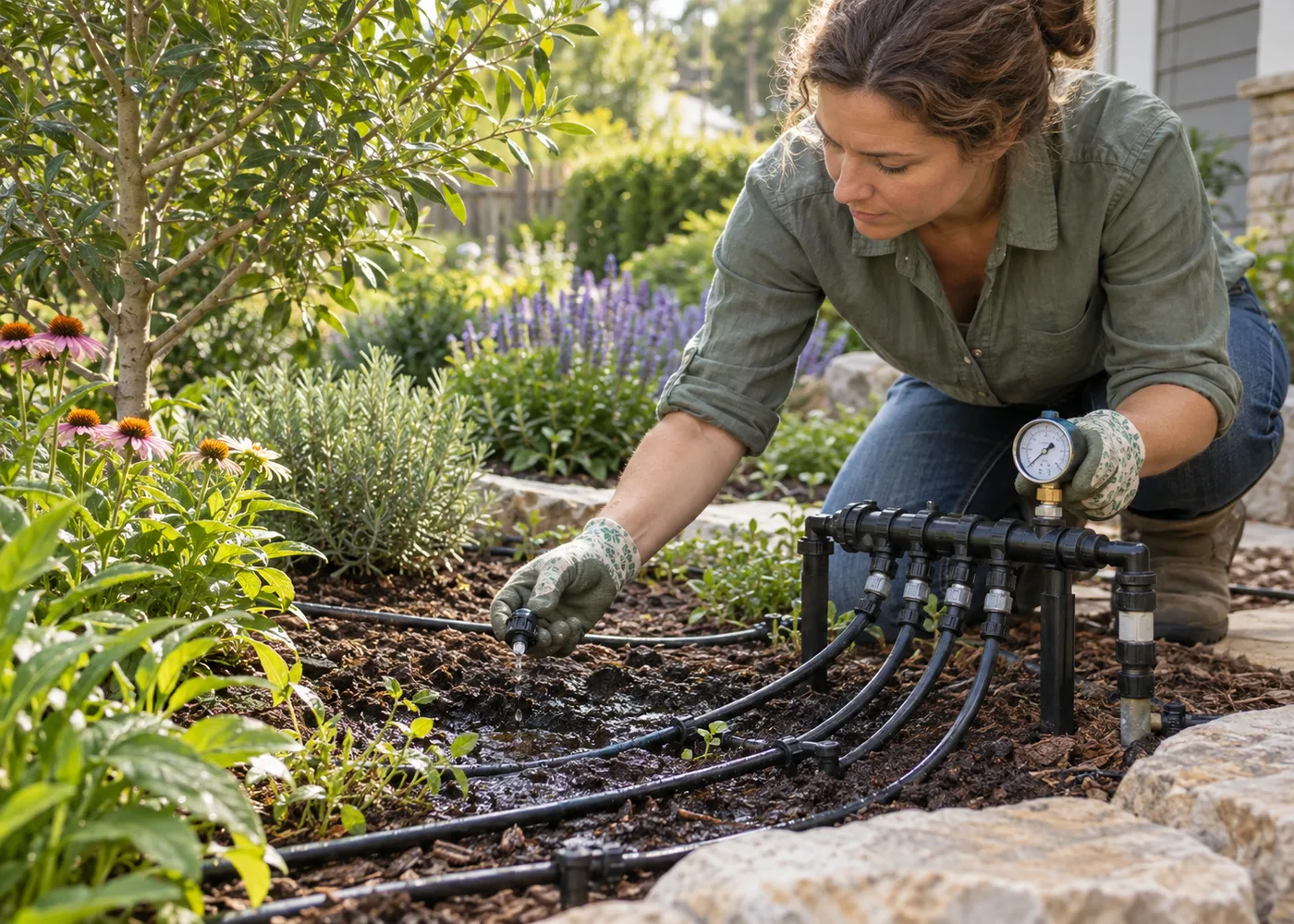
Read the situation
Check a Garden Irrigation System begins with a diagnosis, not a purchase. The main aim is testing flow, leaks, filters and programming at the start of the season. Record what is certain, what changes with the weather and what still needs checking. That distinction prevents the whole project from resting on an impression formed on a single day.
Next consider the plant cycle, recent weather and the true level of priority. Photograph the important points and place them on a dimensioned sketch. A simple but accurate drawing makes choices comparable; an attractive image without measurements cannot show whether the solution will genuinely fit the available space.
Set out a simple method
Define the essential function first, then add what makes it comfortable. Work from large to small: position, levels, access and volumes, followed only then by colours and finishes. For this subject, the decision must stay connected to testing flow, leaks, filters and programming at the start of the season. If an addition serves neither use nor site, remove it from the first option.
Mark the proposal on site with string, stakes, pots or cardboard. Check especially available time, condition before work and the response observed afterwards. Test from several directions and at a time when the space is genuinely in use. This rough prototype often exposes insufficient width or an overbearing volume before correction becomes expensive.
- Observe before cutting or treating.
- Start with the most important area.
- Note what should change next year.
Avoid the tempting shortcut
The most common trap is following a calendar automatically without looking at the garden. Ask which assumption could be wrong: an approximate dimension, soil assumed to drain, a plant shown at the wrong size or a route drawn without people. Check that assumption before adding secondary detail.
Also plan a reversible step. A sample, small trial area or limited first phase provides more reliable evidence than a long abstract debate. Record the date, conditions and expected result so it remains clear why the solution was kept or changed.
Check over time
A resolved result is visible when tasks become shorter, better targeted and less frequent. Review the work just after installation, after substantial rain and at the change of season. Those three moments reveal build quality, water behaviour and the way the garden develops.
Keep a short adjustment list instead of starting again. Changing a height, moving a pot, reducing irrigation or allowing one season of growth may be enough. Check a Garden Irrigation System then becomes a monitored, measurable decision rather than an image frozen on completion day.